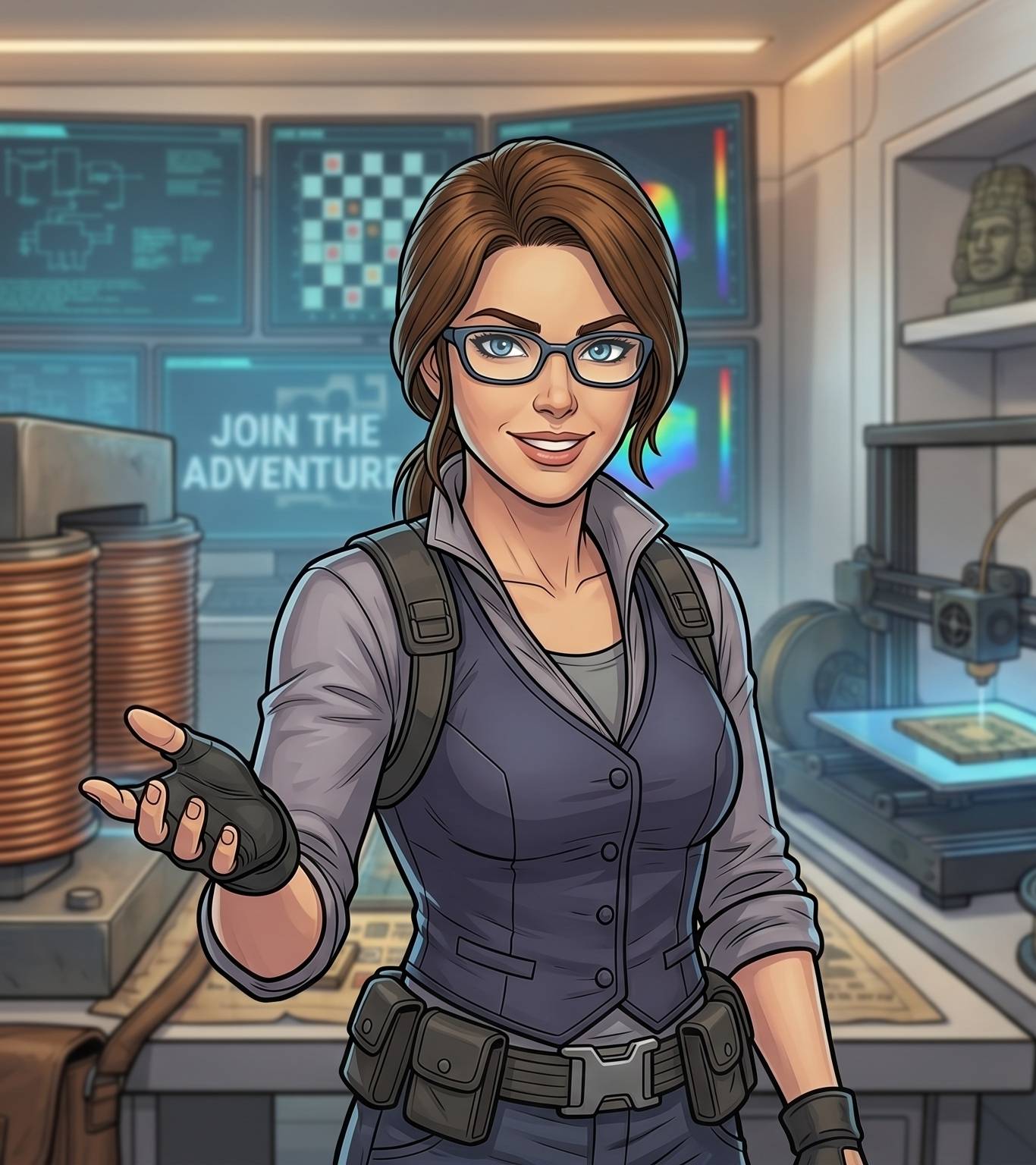
Every Tile Tells a Story.
Yours Begins Here.
A miniature world that tells you stories. Place a figure and the prototype responds with light, sound, and physical choices. Rules and narrative run locally. Connect another tile and the world continues across the table.
No screen. No rulebook. Just play.
What is Tiny Expeditions?
A Dungeon That Thinks,
Speaks, and Grows.
Each tile is a smart room — it detects your miniatures, runs the rules, and tells the story through light and sound. Bring your friends' tiles and snap them together: the dungeon expands, the adventure deepens.
Place & Play
Place a magnet-based miniature on the 4×4 grid. Sixteen analog Hall sensors read the board while 80 LEDs and onboard audio turn movement, choices, and danger into physical feedback. Under the hood →
An Invisible Game Master
An embedded JavaScript engine runs the rules locally. Stories are written in Markdown, compiled into a structured format, and played through light, sound, movement, and choices. Write your own →
Snap Together, Grow Together
Connect rooms and the prototype discovers how the board is arranged, elects one rules authority, and coordinates light and sound across the tiles. Multi-tile hardware and hot-plug behavior remain in active development.
Prototype Evidence
From Laboratory to Hangar.
One Adventure, a Larger World.
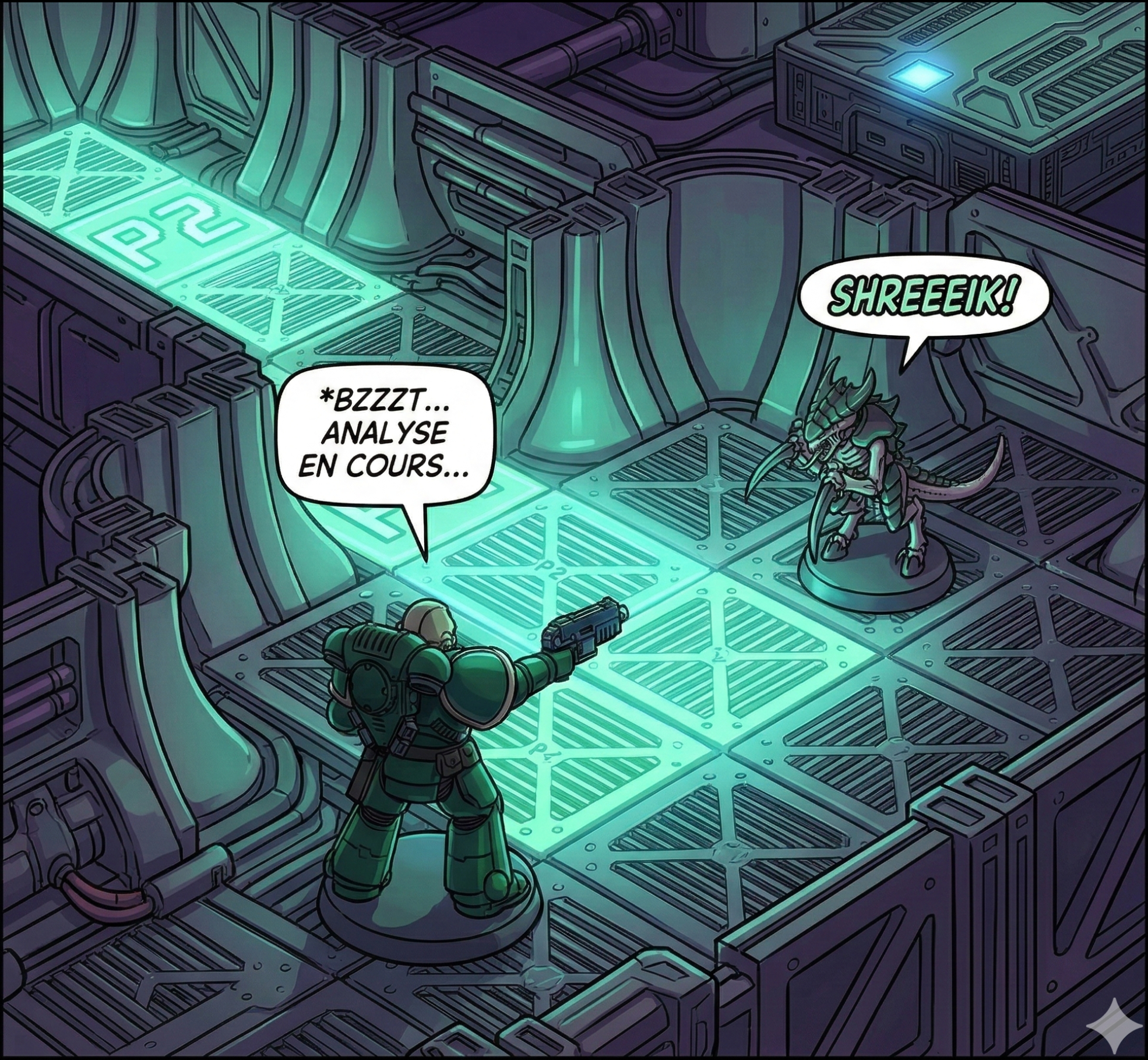
Sergeant Dupuis wakes inside a single-tile laboratory. The board guides his movement, offers a physical weapon choice, resolves combat, then asks the player to connect the next room.
Follow illuminated cells, choose a weapon by placement, and survive the encounter.
The runtime discovers the new tile, its edge, and its orientation.
Game authority moves only after the destination tile is ready; Dupuis and his equipment cross with it.
Hangar 7 adds cross-tile movement, spatial audio, cargo, and another physical choice.
The complete semantic flow and authority handoff pass automated tests. PCB v4 two-tile play is under physical validation; production-safe hot-plugging remains in development.
One Engine, Infinite Worlds
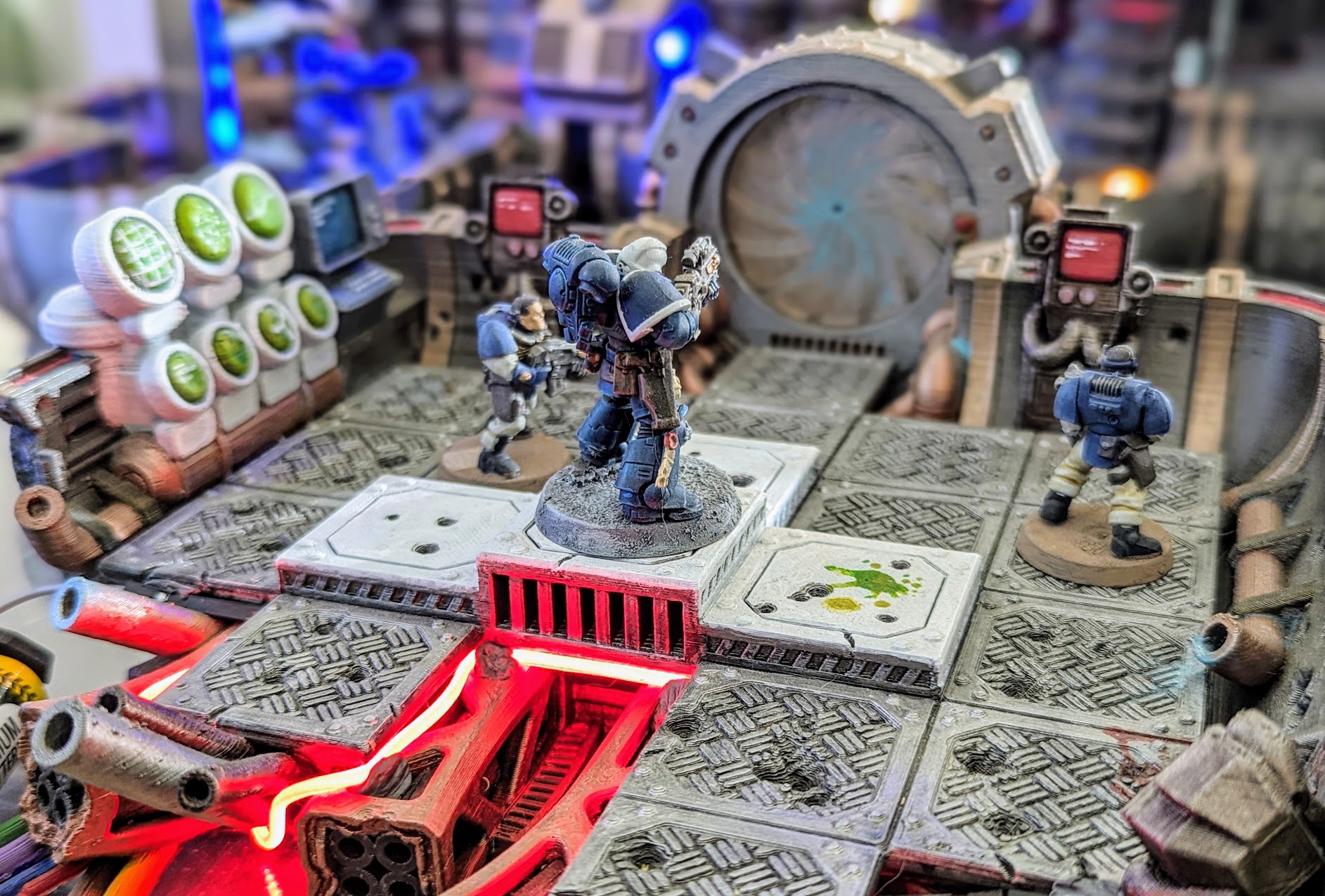
A Living Diorama That Transforms Into an Adventure
On your shelf, it's a breathing art piece — day/night cycles, ambient sounds, subtle light animations. A "book nook" that lives.
Open Platform
We are not building a closed catalogue of 3D worlds. We publish an open integration spec — dimensions, connectors, mounting points — so the existing ecosystem of terrain makers and scenario authors can bring their universes to life on our platform. The goal is not to replace them. It is to give every creator a smart stage. Explore the creator program →
Voice Inside the Story
Léa Guides the Mission
In the SpaceHulk prototype, Léa is an authored character carried by the scenario — not an AI game master. Her recorded dialogue guides Dupuis while light cues show where to move, choose, and act. In Hangar 7, her voice moves from the control console to the hangar terminal as the action crosses the connected board.
The Living Artefact
The board doesn't reset when you shelve it. Your tile, your hero, your loot — persistent forever.
One PCB, One ID
A unique factory ID, bound to your account. Traceable. Tradeable. Forever.
Living Artefact
The tile has memory. Play it, it brightens. Neglect it, it sulks. Your battles, stored on-board.
Persistent Characters
Stats, scars, inventory — your hero grows across every scenario, synced to the cloud.
Loot That Stays
Win a scenario, earn an artifact. Registered to your hero. Rarity tiers. Trade markets.
More Than a Game
A Platform Built Around You
Every tile is a room, a canvas, and a collectible. Play it. Paint it. Trade it. Share it.
Play
Run authored adventures directly on the tile. The working SpaceHulk prototype combines guided movement, physical choices, objectives, combat, light, and local audio without requiring the cloud.
- Complete local scenario flow
- Physical movement and choices
- Offline-first rules and narrative
Collect
Each tile has a unique factory ID. Loot cards ship with every box — monsters, items, abilities, with rarity tiers. Hunt, trade, complete your sets.
- Rarity tiers on cards
- Trade with other players
- Quarterly themed LootBoxes
Craft
The scenery is yours to shape. Paint it, mod it, 3D-print your own designs. The PCB is universal — the art on top is your creation.
- Paintable scenery & miniatures
- Custom 3D-printable skins
- The hobbyist's playground
Share
Bring tiles together and let the adventure expand across the table. The prototype discovers the connected layout, coordinates local effects, and transfers game authority between rooms.
- Dynamic topology and orientation
- Master election and tested handoff
- More rooms, one shared game state
What's in the box?
Your First Expedition
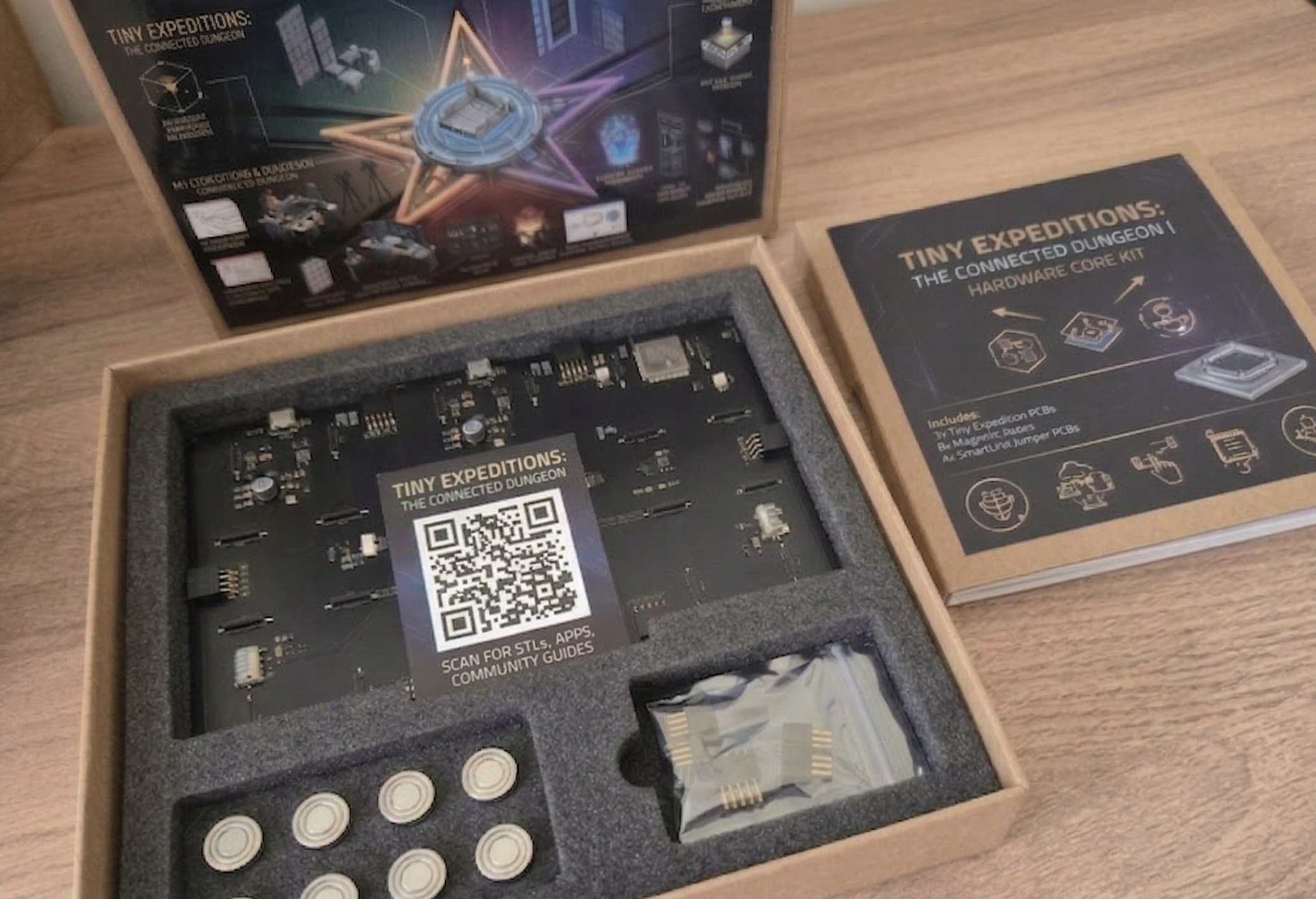
Your starter box is not just components in cardboard. It is a ready-to-play scene with collectible depth, maker potential, and room to grow every quarter.
Current plan: 1 smart tile for your first playable setup.
Place your miniatures directly on the board with stable magnetic positioning.
Mixed sizes to connect your board with additional tiles and setups.
Download the STL files and the launch scenario content.
Be Part of the Build
Join the Founding Crew
Three ways in. Pick the depth that fits.
The Scout
Watch the build from the outside.
- Public devlog — occasional posts
- Prototype photos & milestone updates
- Early announcements before social
The Explorer
On the journey, not just watching it.
- Full build diary — subscriber-only archive
- Community threads & direct comments
- Vote on quarterly drop themes
- Priority access at launch
The Architect
You don't just back it — you build it.
- Early devkit — pre-production hardware, shipped before public launch
- Monthly dev session — small group, direct feedback loop
- Vote on platform direction
$30/yr is Substack's minimum for paid plans — and a deliberate filter: Explorers want the full build story, not just the highlights. The Architect tier ships real pre-production hardware — not a perk, a contract: you test it, you break it, and share feedback.
Honest Answers