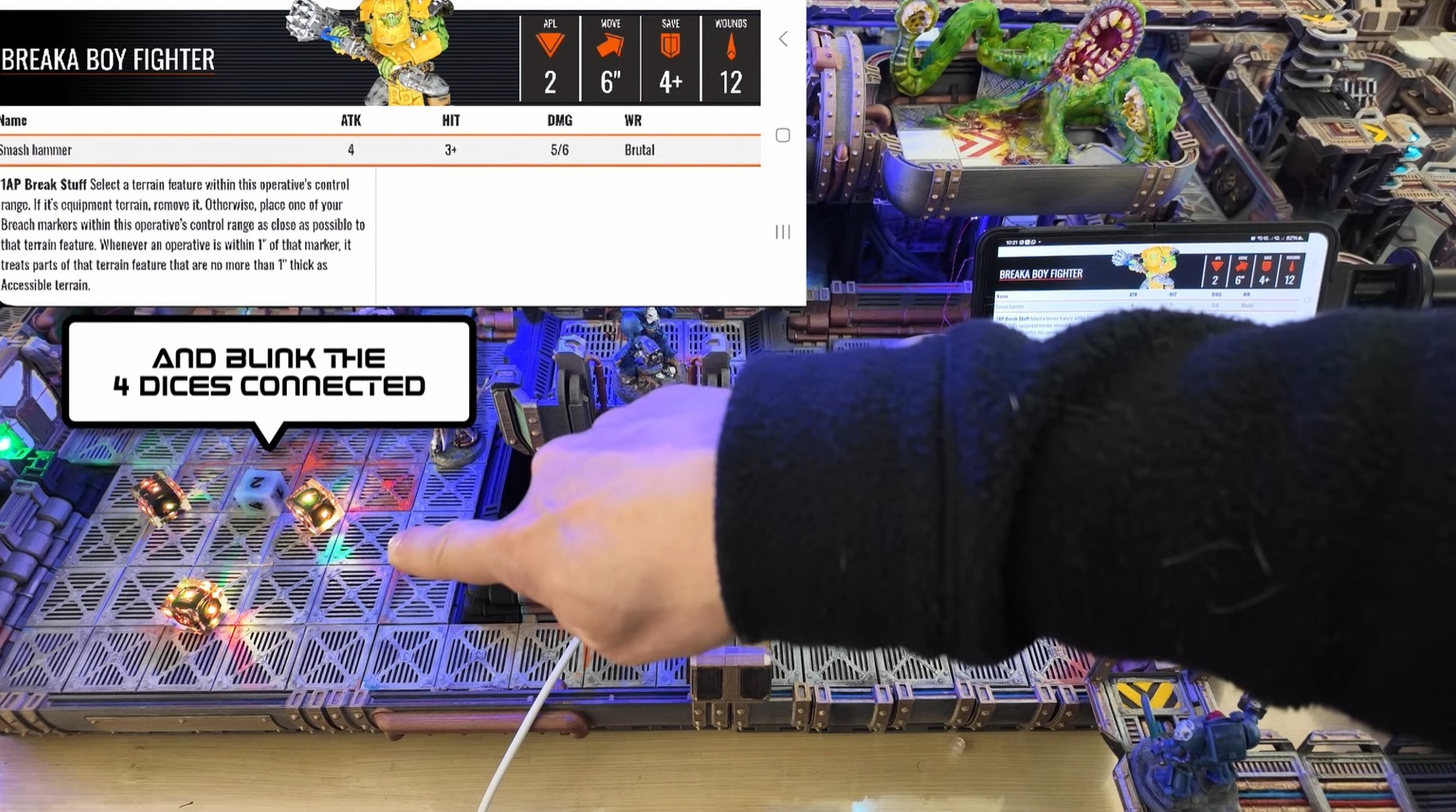
PCB v3 — In Active Development

Under the Hood.
Engineered, Not Imagined.

The PCB is designed. The components are sourced. The architecture is defined. This isn't a concept — it's an engineering project ready for production.
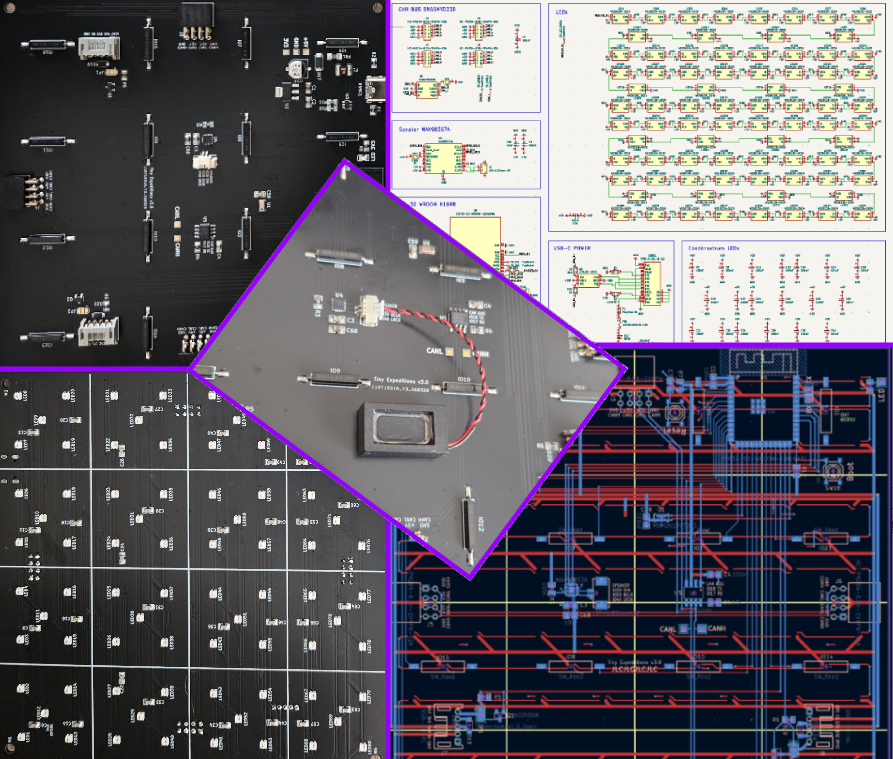
Tiny Expeditions PCB v3 — electronic overview
4×4
Grid per tile
137 mm
PCB form factor
ESP32-S3
N16R8 · 240 MHz
16 MB
Flash · 8 MB PSRAM
USB-C
5V · 3A · up to 6 tiles
BLE 5 · Wi-Fi
2.4 GHz wireless

Miniature Detection

One magnetic sensor per cell — 16 per tile. Place a miniature, the board knows instantly. No batteries in your figures, just a small magnet in the base.

No Screen by Design

80 RGB LEDs and a curated SFX library are the interface. Light draws the path, music sets the mood, sound punctuates every event — no screen required, no app to open.

A Voice on Every Tile

Speaker and PDM mic on board — every tile narrates and listens. As the AI layer matures, each tile becomes an independent voice interface: one room, one DM, no hub.
The Invisible Layer

Three sub-systems that make the tile feel alive — independently of any cloud, any screen, any external dependency.

Offline First — 16 MB Flash

Scenarios and audio assets live entirely on the tile. The 16 MB Octal SPI Flash plus 8 MB PSRAM hold complete campaign content — narration, ambient soundscapes, music — without touching a cloud. Play anywhere, no Wi-Fi required.

Audio Stack

A MAX98357A I2S amplifier drives the speaker at up to 3.2 W with no external power supply. A PDM MEMS microphone feeds audio directly to the ESP32-S3's internal ADC — the hardware pipeline for voice capture is complete on PCB v3, software layer to follow.

On-Board JS Engine

A Duktape JavaScript runtime runs directly on the ESP32-S3. Scenarios are data, not compiled code — loaded from flash, parsed, and executed at runtime. The engine updates independently of the C++ firmware: ship a new scenario engine via OTA without touching hardware code.

Hackable by Design

The PCB is the “Arduino of the tabletop”. JST ports for any custom circuit, CAN Bus as the data backbone, BLE for companion devices like Pixels Dice. Open hardware spirit: schematics, BOM and Physical API published openly so makers can build alongside us. See what the community builds →

JST Plugin Ports

JST Plugin Ports

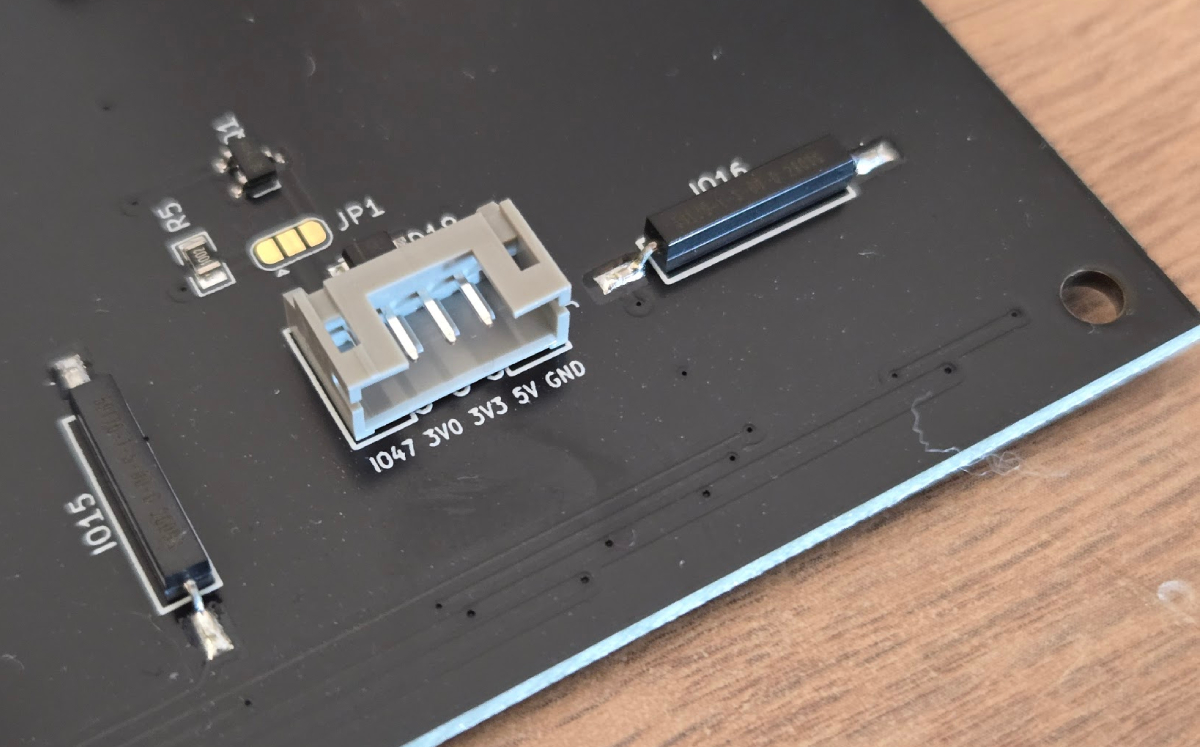
Two 5-pin JST connectors per tile expose 5V, 3.3V, and a dedicated GPIO. Each port works in two modes selected by a solder jumper:

  • Data mode — read a sensor (PIR, color), control an output signal
  • Power switch — GPIO-driven MOSFET toggles a 5V load on/off (fog machine, LED strip, servo)
  • Scenario code controls both modes in real time via simple commands
CAN Bus & SmartLink

CAN Bus & SmartLink

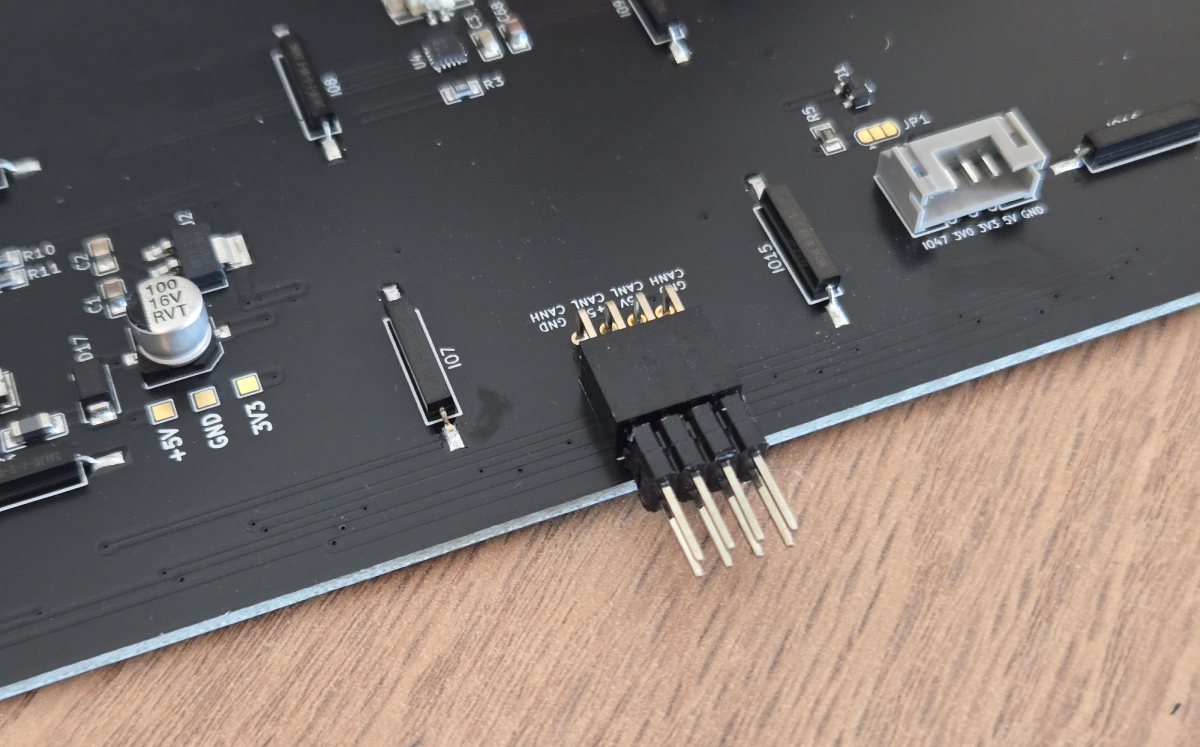
SmartLink connectors on all 4 sides carry both +5V power and CAN Bus data over a single bridge. Snap tiles together and the network forms itself:

  • Daisy-chain 4–6 tiles on a single USB-C 5V/3A source
  • Master/slave auto-election — one tile leads, others report and obey
  • Tiles are interchangeable — any orientation, any neighbour
BLE Companion Devices

BLE Companion Devices

Each tile runs a BLE 5.0 bridge that speaks directly to connected peripherals without any hub or phone app:

  • Pixels Dice — smart electronic d20s blink on cue and report results directly to the scenario engine
  • LEGO SmartPlay bricks — detect and react to LEGO sensor events
  • Open BLE scan API — any BLE peripheral can be added via scenario config

Next in the Stack

Two capability layers currently in active development — local intelligence and cloud amplification.

In Development

Local HTTP API

The tile exposes a local HTTP server over Wi-Fi — no cloud, no account required. A browser, a companion app, or a voice assistant on the same network can query board state, trigger scenario commands, or push new content directly to the tile.

Think: a phone as the GM's screen. Or a Raspberry Pi running campaign logic remotely. The PCB becomes a smart peripheral with a real API.

In Development

Cloud Services Layer

When the tile connects to the internet, cloud services extend what the hardware alone can't do:

  • AI Text-to-Speech — dynamic narrator voices generated live from scenario text, streamed to the tile speaker in real time
  • Speech-to-Text — voice commands captured by the on-board mic, transcribed and dispatched to the scenario engine
  • Per-tile AI assistant — context-aware DM running in the cloud, responding to player actions and improvising within scenario boundaries
  • Screen companion — scenario visuals or Lea's portrait pushed to a TV or tablet on the same network
  • Cloud is an amplifier — all offline scenarios keep working without it

Four Hard Problems.
Solved Together.

Building a phygital platform from scratch means tackling hardware, artistic design, game engine, and hybrid architecture — simultaneously. Here’s what that actually looks like.

Hardware

A proprietary PCB communicating peer-to-peer via CAN Bus — sharing power and data, bypassing BLE limits, and feeding a diverse sensor array directly into the narrative engine. 10+ years of prototyping distilled into a production-ready design.

Artistic Layer

Light, sound, haptic, olfactory — rooms stackable to infinity in 3D, OpenLOCK-compatible. The PCB's role is to elevate the artistic experience: how universes are designed, how light diffuses, how atmosphere is authored without code.

Game Engine

The board must expose a simple, elegant interface for scenario authors — no firmware knowledge required. Screenless, offline-first. Every hardware capability accessible from a Markdown scenario file. 4 years of framework work behind it.

Hybrid Environment

Alambic framework: offline-first + cloud amplification. Generative AI for story, voice, video. Persistent room identity across sessions. Dozens of arbitrage decisions between local reliability and cloud-powered depth — still live.

The opposite of walled-garden IoT. JST ports, CAN Bus, an open 3D mounting standard, and a public scenario format — designed to be extended, not locked. The PCB is a stage; what you build on top is yours. See the creator program →

Schematics, BOM, Firmware, 3D-Print Stack

Deep dives published as we build — schematics, BOM reviews, firmware architecture, and hardware validation logs.

Join The Expedition